_TX_60.png)



Dr. Jennings,
I was wondering what you think the Christian’s relationship with music ought to be. Since the Bible doesn’t speak to the popular styles of music of our day, is there any scientific research or human experience that you might cite in order to either recommend or caution against rock, pop, jazz, and hip hop style music?
How about classical style music? I’m mostly interested in learning more about the relationship between music and the brain.
A great review, by Sarkamo et al., is found in Brain: A Journal of Neurology (January 2008, Vol 131;3 p 866-876).
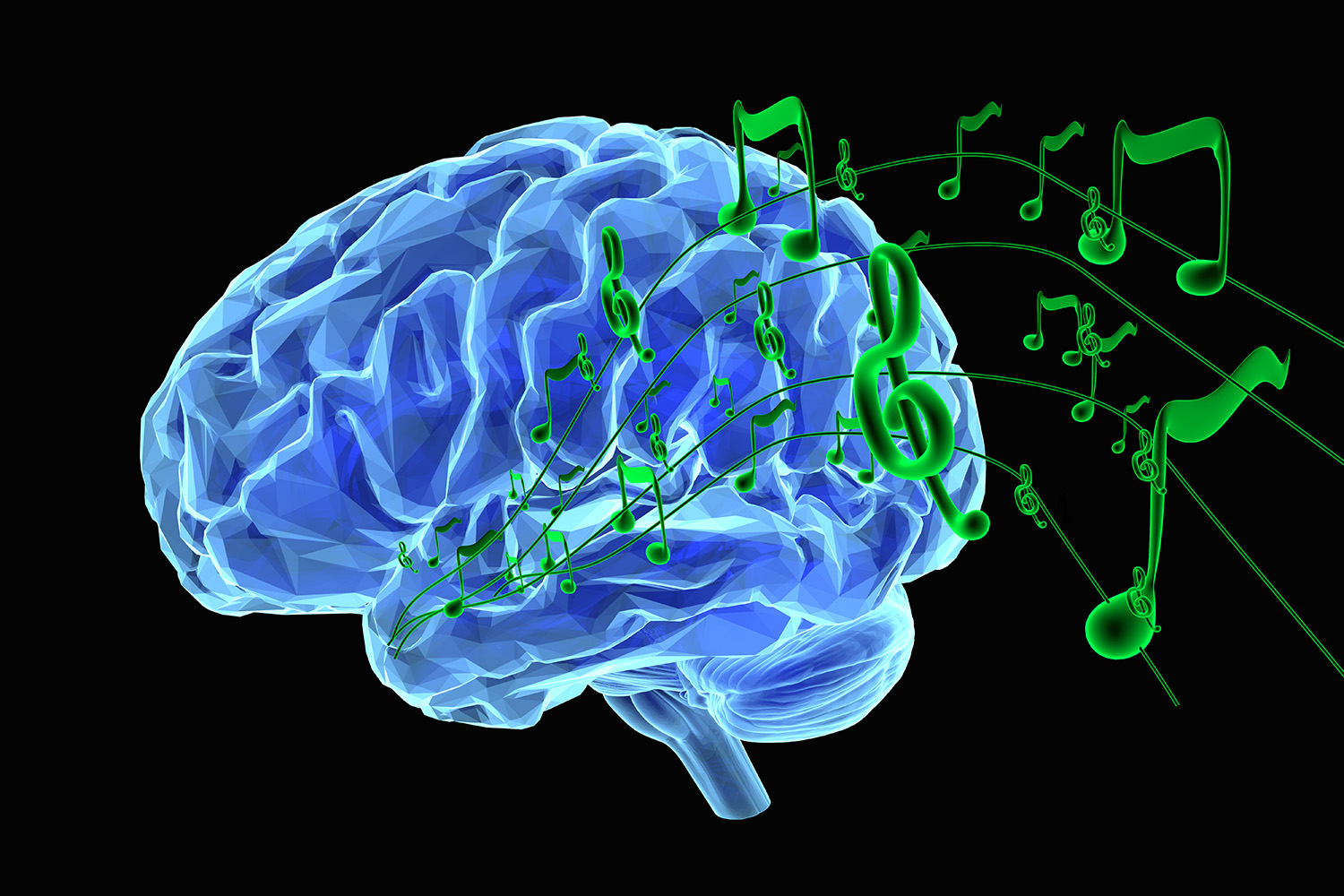
Listening to music is a complex brain process that triggers activity in not just the auditory brain circuits, but activates the emotional and cognitive regions, the bilateral network of frontal, temporal, parietal, and motor functions, as well as impacting memory, attention, pain processing, mood, impulse-control, manual dexterity, and emotional processing. (Peretz and Zatorre, 2005, Bhattacharya et al., 2001; Janata et al., 2002; Koelsch et al., 2004; Popescu et al., 2004), Blood et al.,1999; Blood and Zatorre, 2001; Brown et al., 2004; Koelsch et al., 2006; Menon and Levitin, 2005).
Music can reduce anxiety, depression, and reduce pain perception. (Cassileth et al., 2003; Cepeda et al., 2006; Siedliecki and Good, 2006).
Recent cognitive and neuropsychological studies suggest that it may also enhance a variety of cognitive functions, such as attention, learning, communication, and memory, both in healthy subjects (Wallace, 1994; Thompson et al., 2001; Thompson et al., 2005; Schellenberg et al., 2007) and in clinical conditions, such as dyslexia (Overy, 2003), autism (Gold et al., 2006), schizophrenia (Talwar et al., 2006), multiple sclerosis (Thaut et al., 2005), coronary artery disease (Emery et al.,2003), and dementia (Brotons and Koger, 2000; Foster and Valentine, 2001; Van de Winckel et al., 2004). In stroke rehabilitation, elements of music have previously been used as a part of physiotherapy (Thaut et al., 1997) and speech therapy (Belin et al., 1996) to enhance the recovery of motor and speech functions.
Sarkamo et al. also documented that post stroke patients who listened to music daily, when compared to those who listened to audio books and those who listened to neither, “showed that recovery in the domains of verbal memory and focused attention improved significantly more in the music group than in the language and control groups. The music group also experienced less depressed and confused mood than the control group.”
Brain scans of children’s brains before and after musical training demonstrate structural brain changes for children who received music lessons. It had been previously documented that adult musicians have structural differences in their brains when compared to non-musicians. The question was whether the differences existed prior to the musical training and contributed to their musical ability or whether the brain changed as a result of the musical training.
Gottfried Schlaug of Harvard Medical School conducted a study (The Journal of Neuroscience DOI: 10.1523/jneurosci.5118-08.2009), which documents different brain development in children receiving music lessons.
They matched musically untrained 6-year-olds for socioeconomic background and gender and then randomized them into two groups. One group received keyboard lessons for 15 months, the other group didn’t. MRI scans documented that the part of the brain associated with hearing and manual dexterity (auditory and motor cortex) grew larger in those who had lessons. These children did better in tasks involving manual dexterity and their ability to differentiate melodies. But the two groups did not show differences in unrelated skills such as mathematical ability.
Such research has led world renowned neurologist Oliver Sacks to state,
“I said earlier that there’s no one music center. And one of the things which is now apparent from brain imaging is that music can involve many different parts of the brain, special parts for the response to pitch, and to frequency, and to timbre, and to rhythm, and to melodic contour, and to harmonic and everything else. In fact you may find that much more of the brain is involved in the perception and the response to music than to language or anything else. One aspect of this is that if one does brain imaging, you can often distinguish the brains of musicians from the brains of non musicians, because certain parts of the brain may become so enlarged in response to music that you can see the changes with the naked eye. You can’t say that’s the brain of a mathematician or a visual artist. You may be able to say, I think that’s the brain of a musician.”
Clearly music has profound impact upon our brains and thus our mental and physical health. So the obvious question, does the type of music one listens to really matter? Or is all music equally beneficial?
From a Christian point of view, one is immediately cautious. Does it really make sense that a modality which has as powerful an effect upon the human brain as music would not be exploited by Satanic forces? Would Satan really attack humanity in every other way but not pervert and twist music to his purposes, especially when we realize who Satan was before his fall?
The Hebrew for “Lucifer” is helel (brilliant one) or halal (to flash forth light) and comes from the root word, halel, which is the same root for “Hallelujah.” Lucifer was the heavenly Hallelujah or choir master or music leader!
But our suspicion that music could be exploited to cause negative effects upon brain development, mental, physical and spiritual health is not sufficient. If our suspicions are true, then evidence should document this reality. And, in fact, the evidence does.
Research by Wingwood et al., published in the American Journal of Public Health (March 2003, Vol 93, No. 3 | 437-439), documented that,
Logistic regression analyses illustrated that after controlling for covariates, greater exposure to rap music videos was independently associated with a broad spectrum of health outcomes. Compared with adolescents who had less exposure to rap music videos, adolescents who had greater exposure to rap music videos were 3 times more likely to have hit a teacher; more than 2.5 times as likely to have been arrested; 2 times as likely to have had multiple sexual partners; and more than 1.5 times as likely to have acquired a new sexually transmitted disease, used drugs, and used alcohol over the 12-month follow-up period.
Previous research by Robinson, Chen, and Killen, published in Pediatrics (Jun 4, 1998) documented that watching pop music videos increased the risk of adolescent alcohol consumption by 31%.
In 2006 Brown et al. published in Pediatrics (Vol. 117 No. 4 April 2006, pp. 1018-1027), that exposure to sexual content in music increases sexual behavior in adolescents. In fact white adolescents age 12-14 who had the highest intake of music with sexual content, were 2.2 times more likely to have had sex within the next two years as those adolescents of the same age who had the lowest intake of music containing sexual content.
Clearly music can affect us, some music promotes positive effects while other music is damaging. The question of course is, how does one know what music is beneficial, what is harmful and what is neutral in its effect?
There is a Biblical principle that seems to get it exactly right, “whatever is true, whatever is honorable, whatever is right, whatever is pure, whatever is lovely, whatever is of good repute, if there is any excellence and if anything worthy of praise, dwell on these things” (Philippians 4:8).
First examine the lyrics – if the lyrics are violent, sexual, vulgar, nihilistic, unkind, cruel, defamatory, or otherwise ugly then I would recommend against such music. Both science and scripture warn of the damaging consequences to such content.
Second examine the emotional reaction. Does it relax, calm, unwind, inspire, encourage, or instead does the music cause tension, frustration, anxiety, stress or even discomfort?
Third examine the impact the music has on attitude, behavior, function and performance of your children. Any music which is consistently associated with negative attitudes, rebelliousness, hostility, irritability, or reduction in healthy function should be carefully scrutinized and removed from the auditory diet of the child if found to be damaging.
Regarding music style, volume is key – any volume which damages auditory neurons is unhealthy and unreasonable, regardless of style of music and should be avoided. Certain music genres are more consistently associated with damaging volumes, so greater caution should be exercised with such music.
In summary, music has profound impact upon the human brain with subsequent affect on mental, physical and spiritual health. Music which has demonstrated beneficial effects include classical, baroque, religious, inspiration, spiritual, and many forms of modern music which connote healthy messages. Whereas, rap, heavy metal, and other forms of modern music which connote unhealthy messages, values or morals, or which cause stress, anxiety, tension or irritibility have demonstrated harmful effects. As always, while we are all free to choose freely which music we prefer, not all music is equally healthy – choose wisely!






 using your credit or debit card (no PayPal account needed, unless you want to set up a monthly, recurring payment).
 instead?